
The Pine Bark Boat
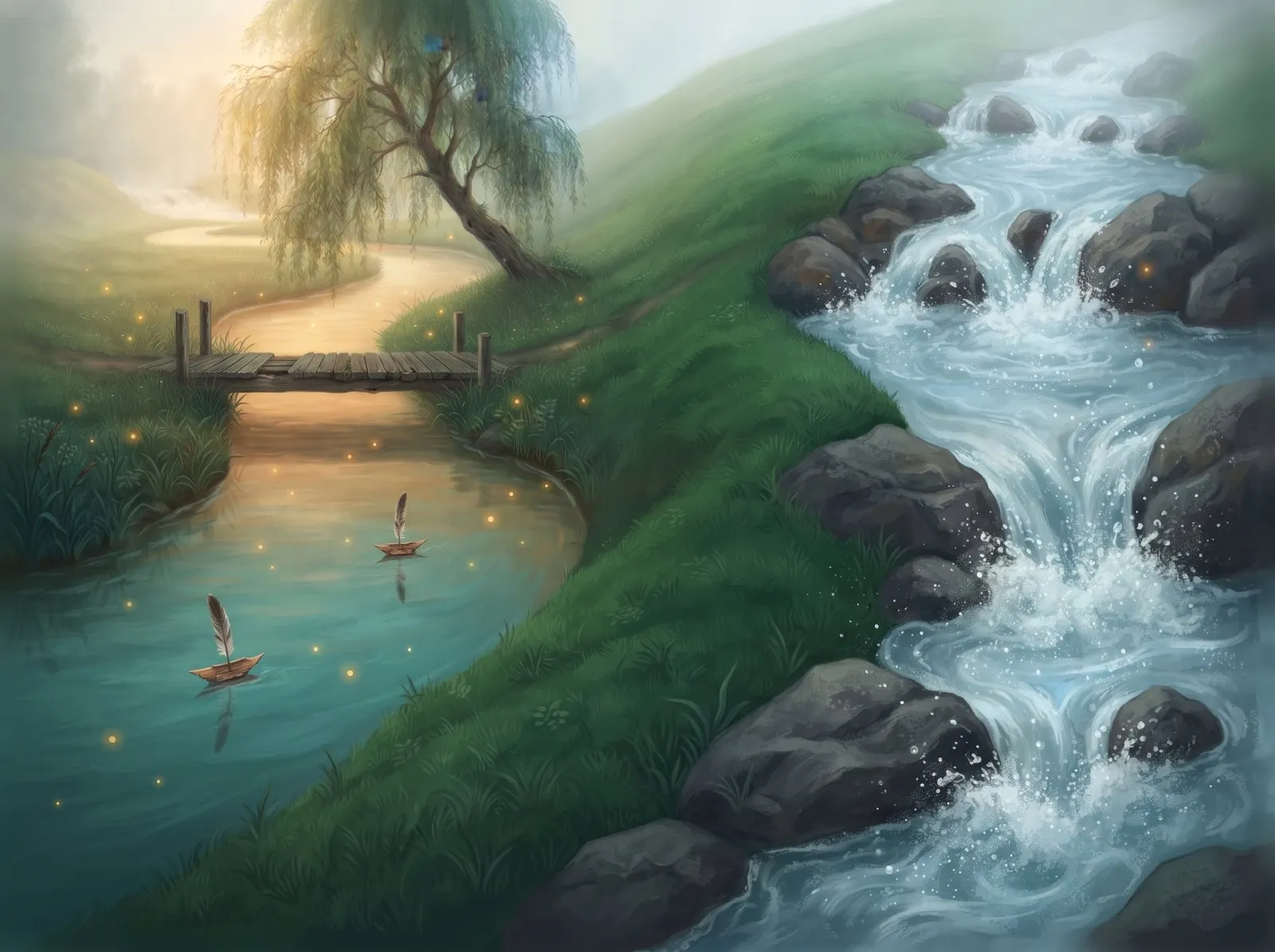
Alanta the river flows slowly. Burble, burble, burble.
Children float little boats on her. Alanta carries them very carefully. Burble, burble.
Over the hill there’s another river, Zvelsa (ZHVEL-sa). She’s fast and she’s loud. Whoosh, whoosh!
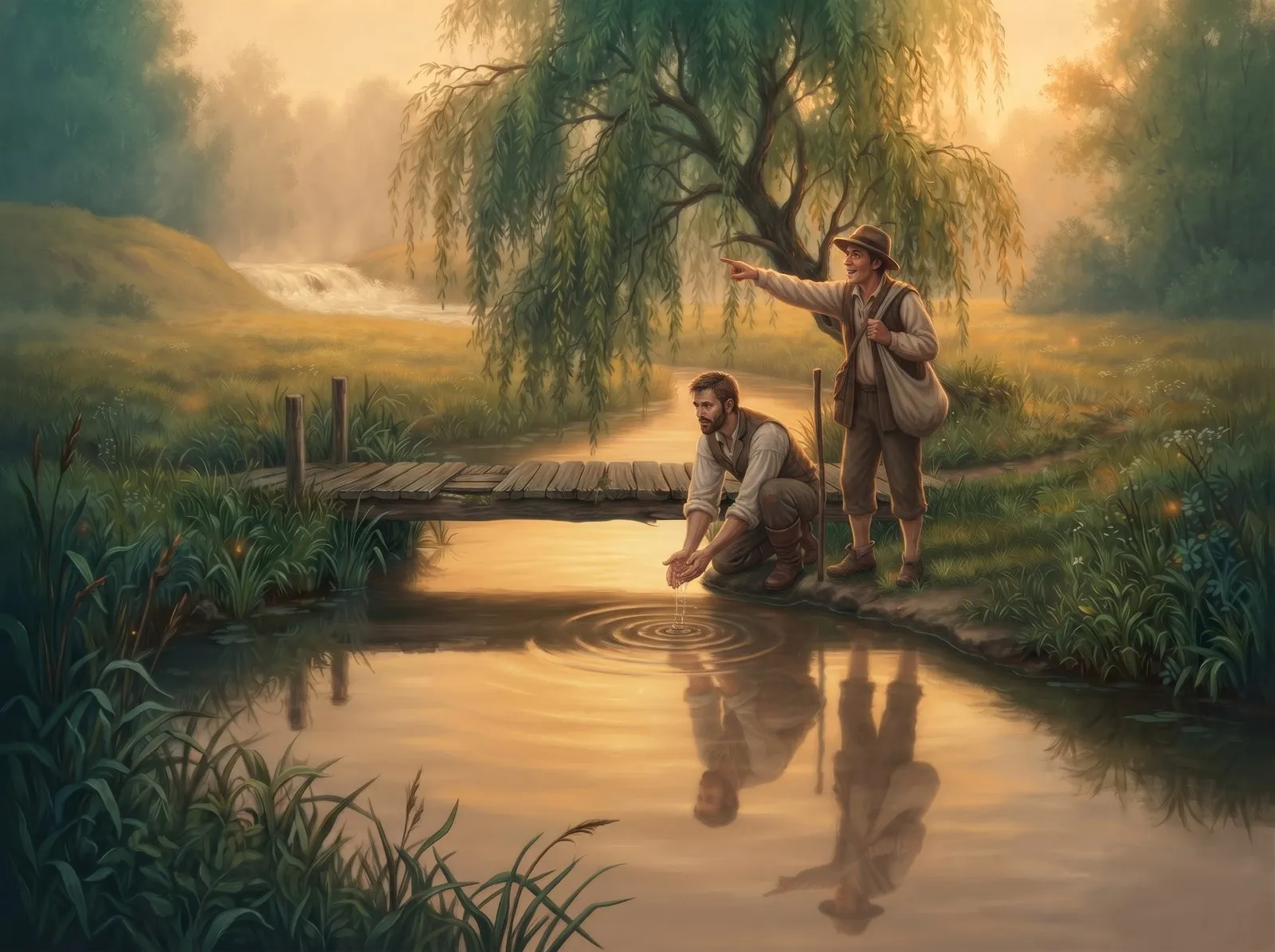
Two men came walking by.
“Zvelsa’s so much fun!” they said. “But this river’s so slow.”
Alanta felt sad.
“I want to be loud too!”
And off Alanta ran. Fast, fast, all the way down the hill. Whoosh, whoosh! Splashes everywhere!
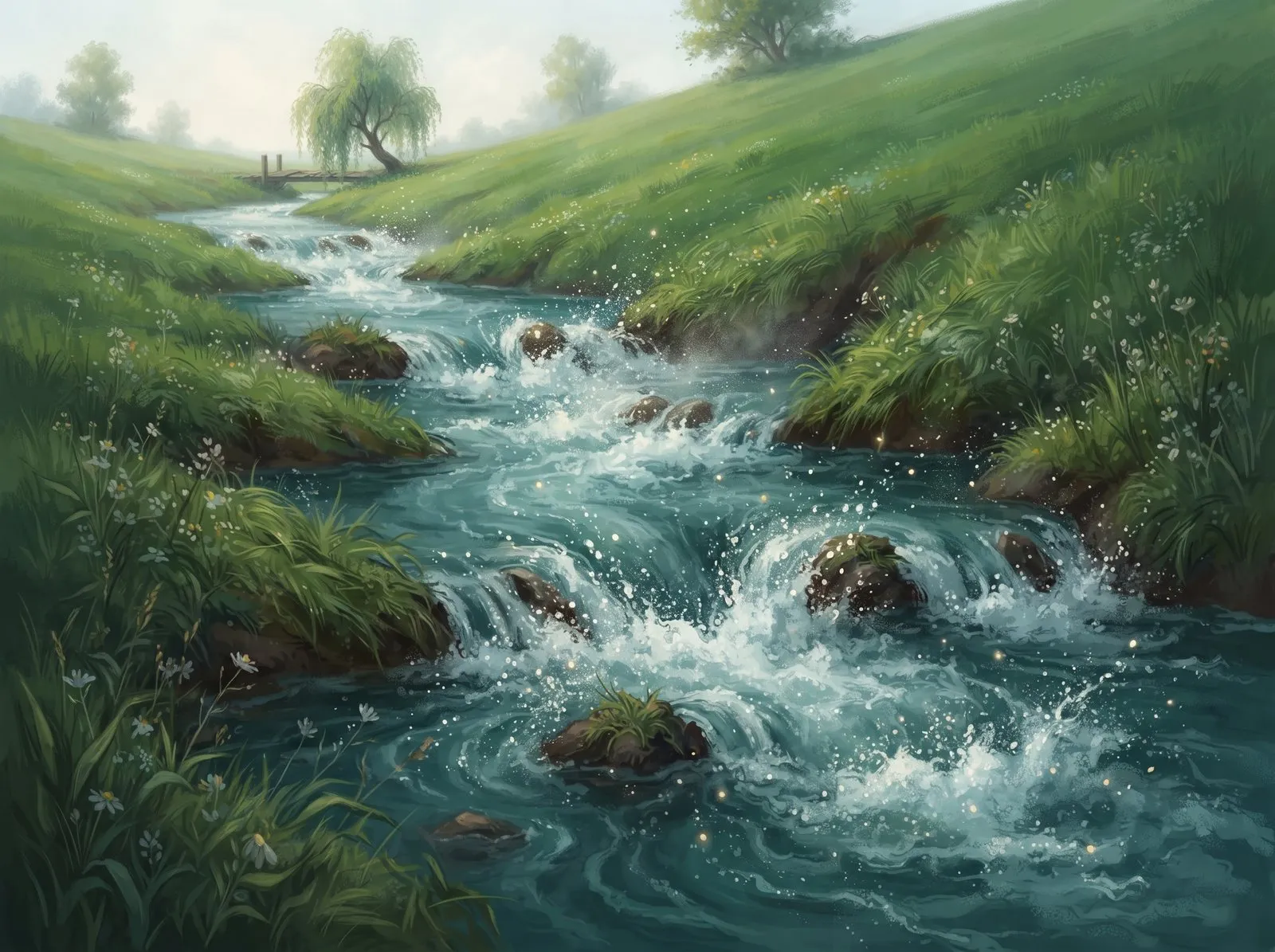
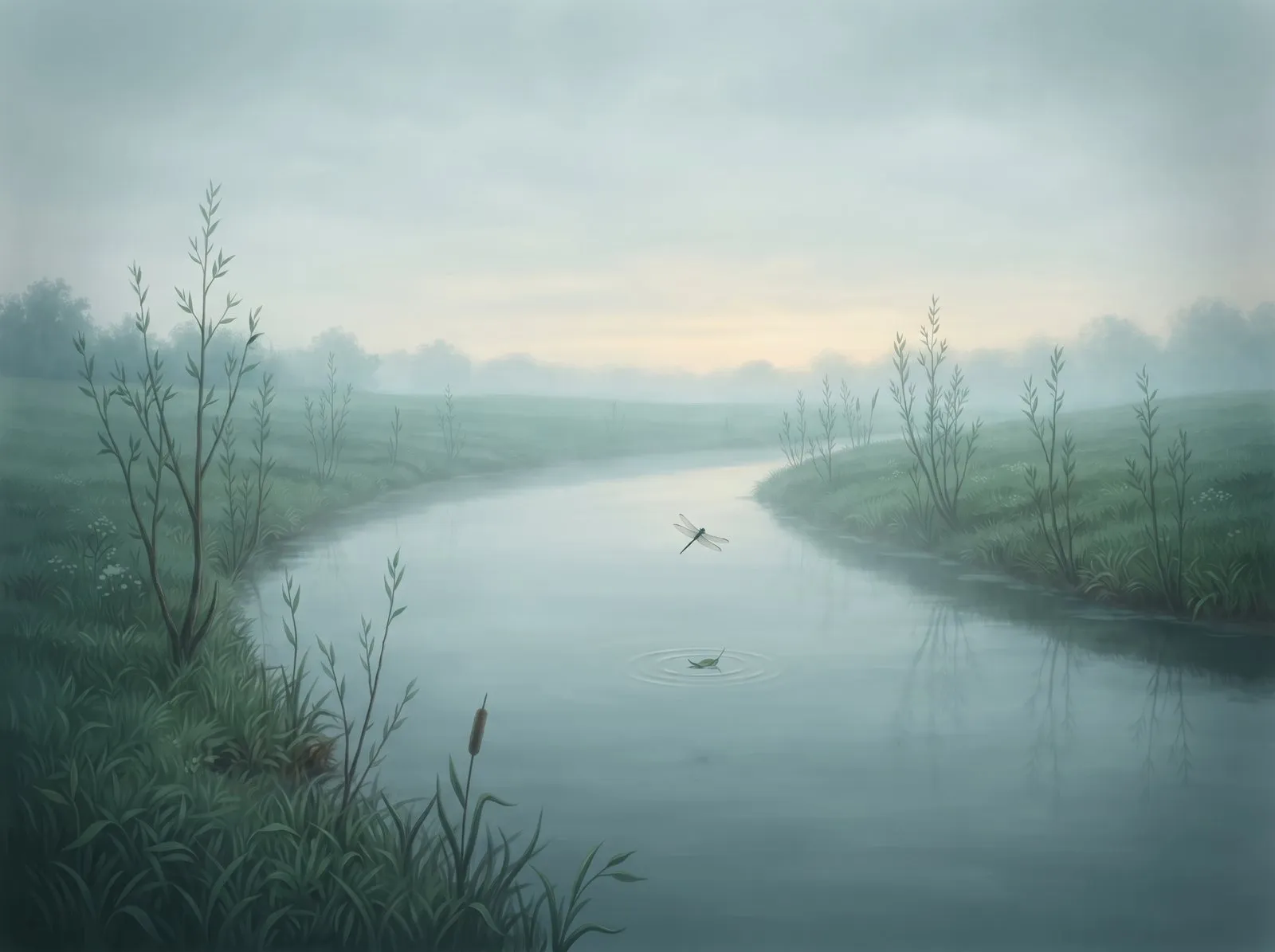
But when Alanta got to the bottom, there were no children. No boats. Just quiet.
“Where are my children?” Alanta burbled sadly.
And then a little girl came running. She had a boat with a red thread. Plop! In went the boat.
Alanta didn’t rush. She carried the boat slowly and carefully. Burble, burble, burble.
The little girl ran along the bank, laughing.
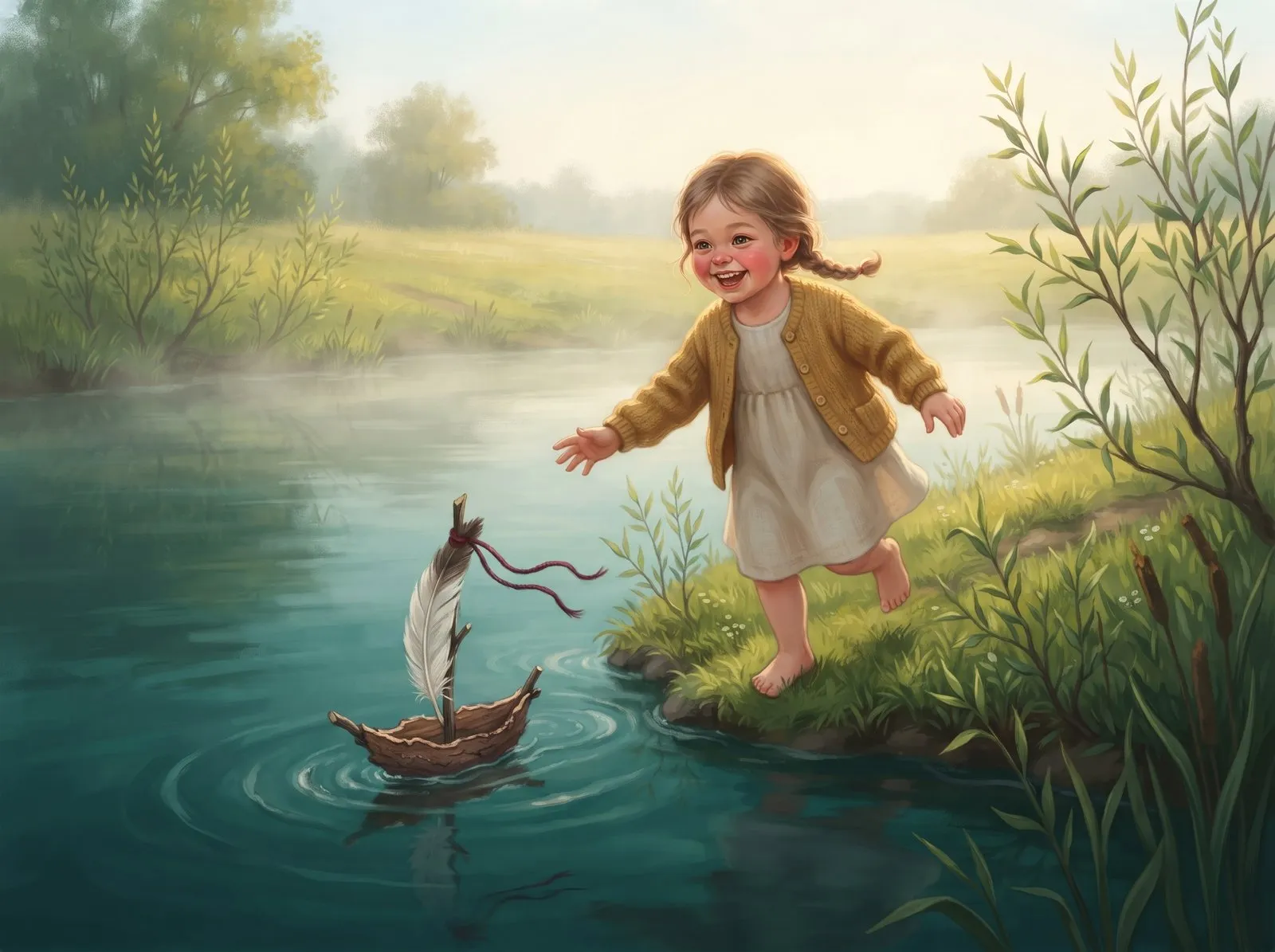
Alanta flowed slowly again. Burble, burble, burble. And she felt good.
Alanta the river flowed slowly and calmly. She wound through the meadow in a big loop, just so she could stay a little longer by the old wooden footbridge. That’s where the village kids floated their pine bark boats with feather sails. Alanta carried them very carefully, so that not a single one tipped over, and at the bend she’d wait for the kids to come running along the bank.
Over the hill flowed another river, Zvelsa (ZHVEL-sa). She jumped over rocks, splashed spray everywhere and roared so loud you could hear her miles away.
One day two travellers stopped at the footbridge. They washed their hands, but they hardly even looked at Alanta.
“Hear that? Zvelsa?” one of them said. “Now that’s a river! You could watch her all day.”
The travellers walked off, and Alanta took a look at herself. Slow. Quiet. Carp dozing on the bottom. “I’m boring,” she thought.
From then on, Alanta was cross with herself. She tried to roar, she threw herself against a rock, but all she got was a few muddy drops. And when a boy put his boat in the water, she didn’t even look. She gave it a grumpy shove, and the boat got stuck in the reeds. The boy went home sad.
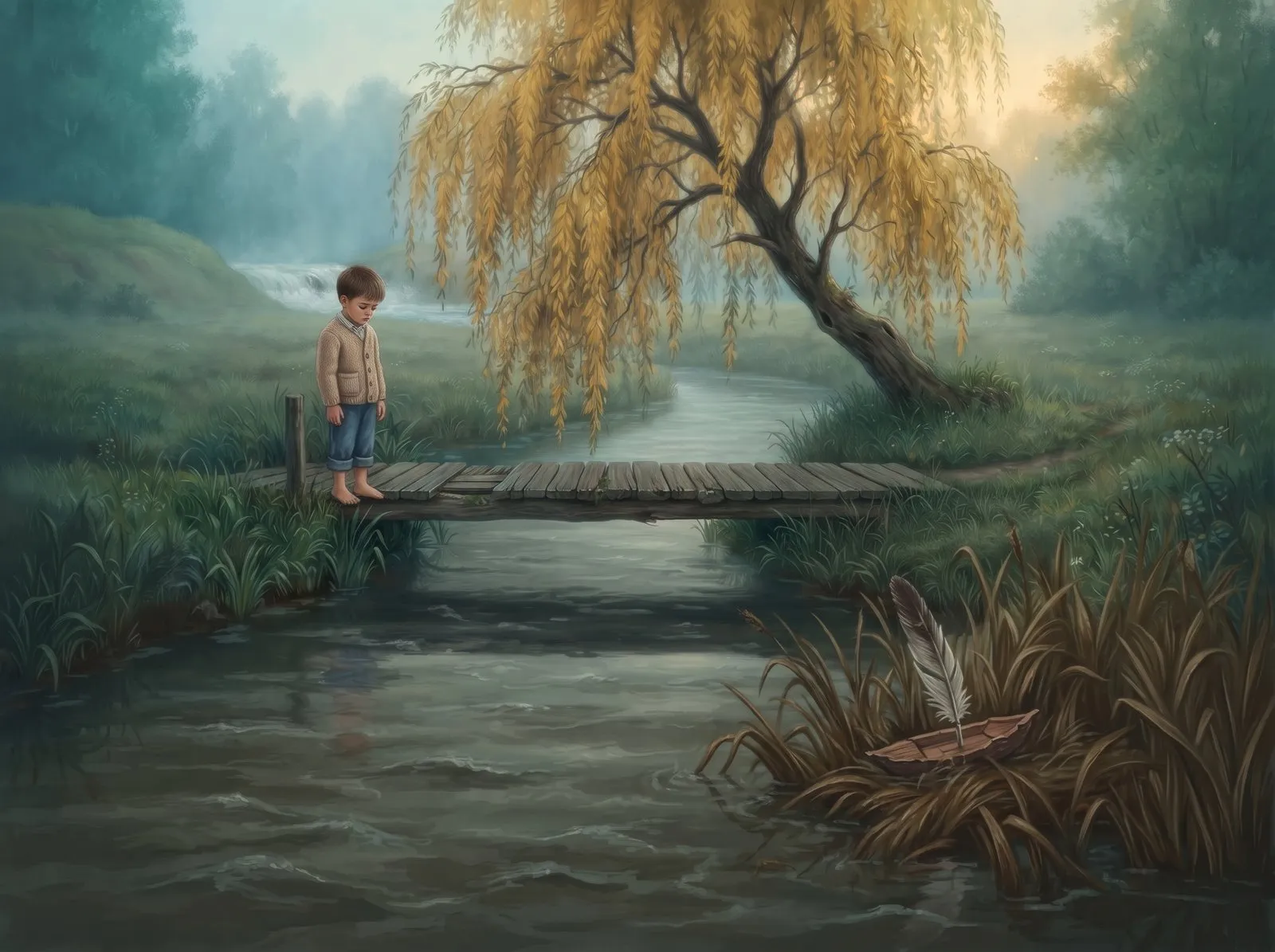
In spring, Alanta flooded, and she came up with a plan. Next to her loop there was an old ditch that ran straight down the slope. Alanta pushed into it with all her might, gnawing at the earth, rolling clods of mud, until at last she shot off down a brand new, straight path.
Whoosh! Splash! Foam! Alanta raced along, fast and loud, just like Zvelsa.
“Finally!” she cheered.
But the slope ended pretty quickly. The water slowed down again. Alanta looked around: no willow, no footbridge, no kids. Just empty bushes and quiet.
A few weeks went by. One morning a little girl came down to the new bank with a wonky bark boat with a red thread tied to it. Over the hill Zvelsa roared again, and Alanta’s heart squeezed tight. But she looked at the girl, at her little boat, and she decided: today, she wasn’t going to rush.
Alanta gently caught the boat, spun it round in a little whirl, and carried it slowly, so the girl could keep up running along the bank. The girl laughed, and her laugh rang out like a little bell.
Alanta had something to carry again. And she understood that being slow had never been boring. It was how she took care of things.
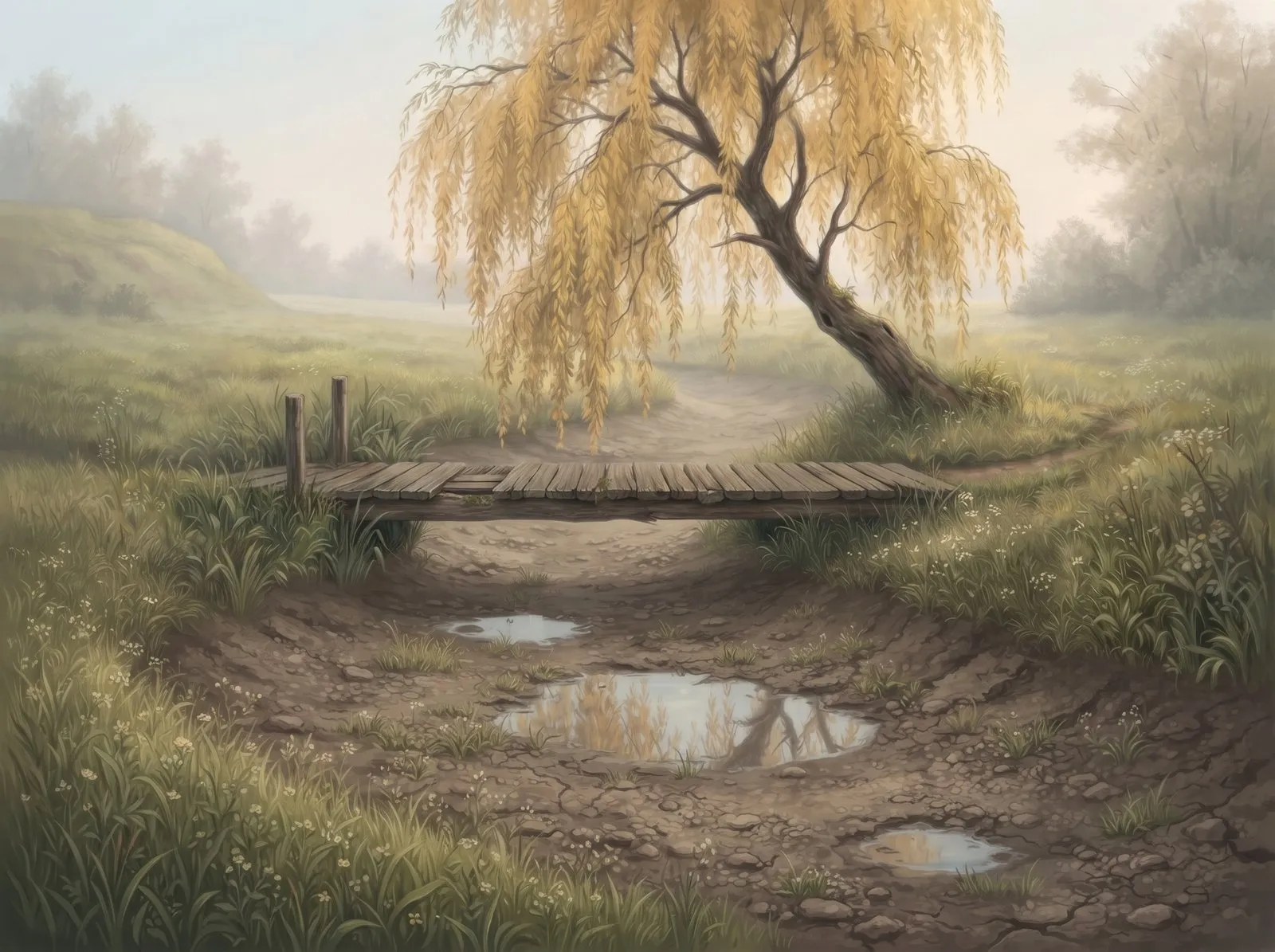
And up above, where the old loop used to wind, only a few puddles are left. The old footbridge stands there, quiet and dry. Maybe one day flowers will grow all around it.
Alanta loved tickling the willow branches that dipped into her water and throwing little flecks of sunlight onto the undersides of their leaves. She took her time, curling in a wide loop around the damp meadow, just so she could stay a bit longer by the old wooden footbridge. Its sun-warmed planks smelled of resin and summer dust. When the village kids crouched there and set their pine bark boats with feather sails on the water, Alanta held her breath. She carried them so carefully that not one ever tipped over, and at the bend she’d wait until bare feet came running along the bank.
On the other side of the hill, down a rocky gorge, Zvelsa (ZHVEL-sa) went racing past. She crashed cheerfully into the boulders, flinging cold silver spray, and sometimes, when the wind was right, she’d shout a “hi!” over to her neighbour.
One afternoon two travellers stopped on Alanta’s footbridge. They rinsed their hands in the calm water, but barely glanced at the river itself.
“Can you hear Zvelsa roaring over the hill?” one of them said, all excited. “Now that’s power! The water’s practically boiling. You could watch it for hours.”
The travellers left, and suddenly Alanta’s depths felt heavy and murky. She looked down at her own bottom: lazy weeds swaying, carp dozing in the mud. No roar at all. Just a slow, boring bend.
From that day on, Alanta’s sides ached every time the wind carried Zvelsa’s distant rumble over. She was angry at her slow bends, and at the willow roots that kept catching at her current. Hoping to make even one white splash, she flung herself with all her strength at the only rock on her bank, but all she got was a few muddy drops. And when a boy launched his bark boat from the footbridge that autumn, Alanta didn’t even look at it. She shoved it with her current, and the boat got stuck straight away in the wet reeds.
Just before Alanta’s long loop, an old dry ditch ran across the meadow. It cut straight down the slope and met up with the riverbed again further down, skipping the willow and the footbridge altogether.
In spring, when the snow melted and Alanta flooded, she made up her mind. Instead of flowing calmly into her old loop, the river threw her whole weight against the steep side of the ditch. She gnawed at the turf, tore up grass roots and rolled over clumps of clay. The narrow ditch got wider and deeper, until finally the whole current went crashing down the new, straight path.
Alanta was thrilled. Tumbling down the steep slope, she was finally roaring! Her back was all foam, her water smashed into freshly uncovered rocks and threw up clouds of cold spray. She was fast. She felt powerful and alive.
But the slope ended quickly, and the current spilled out onto a wide, flat lowland. Here the water lost its speed, spread out and slowed down again. Alanta looked around. All that rustled around her were empty willow thickets. No old willow tree, no warm footbridge planks for barefoot kids to run along.
A few weeks went by. One morning a girl came shyly down to the new clay bank. Sinking into the soft mud, she carefully set a wonky bark boat on the water, with a thick red thread tied to it. Over the hill the wind carried Zvelsa’s roar again, and for a moment Alanta’s chest tightened. But she looked at the girl’s worried little face, at that tiny piece of bark she’d picked out so carefully, and she made up her mind one more time. The river gently caught the boat, let it spin round happily in a little whirl, and carried it slowly along the bank, keeping pace with the small feet running through the grass. She had something to carry again. And next to her, kids’ laughter rang out again, bright as a little bell.
Only higher up the valley, where the old loop used to wind, a few drying puddles were left. The old wooden footbridge under the willow stood quiet and dry, hanging over a riverbed that was slowly growing over with grass.
Alanta never hurried. She liked tickling the willow branches that drooped into her water and tossing flecks of sunlight onto the undersides of the leaves. She liked curling in a wide loop around the damp meadow, just to stay a little longer by the old wooden footbridge. Its warm planks smelled of resin and dust, and in summer the village kids would crouch on them and set their pine bark boats with feather sails on the water. That’s when Alanta held her breath. She knew every one of her eddies and every stone, knew where to turn a boat and where to let it rest, and at the bend she always waited until bare feet had time to come running along the bank. Nobody taught her that. It was just who she was.
Over the hill, down a rocky gorge, ran Zvelsa (ZHVEL-sa): cold, silver, noisy. Sometimes she’d shout a “hi” over the wind to her neighbour, and Alanta would answer with a calm little splash. They never compared themselves. Why would they? They were different rivers.
Until one afternoon two travellers stopped at the footbridge. They washed their hands, shook the water off their fingers, and looked past Alanta the way you look past a window.
“Hear Zvelsa?” one of them said. “Now that’s power. The water’s practically boiling. You could watch it for hours.”
They left, and an hour later they probably didn’t remember what they’d said, or the river they’d washed their hands in. But Alanta remembered.
For the first time, she looked at herself through someone else’s eyes. Weeds swaying slowly, like tired hands. Carp dozing in the mud. A bend that wasn’t in a hurry to get anywhere. Everything that had been her yesterday looked like a list of flaws today.
From that day on, Zvelsa’s rumble, which used to be just her neighbour’s voice, turned into a reproach. Every time the wind brought it over, Alanta’s sides ached. She was angry at her bends, at the willow roots that seemed to catch at her current on purpose and slow her down. Once she threw herself with all her strength at the only rock on her bank, hoping for even one white splash, and all she raised was a few muddy drops. That was worse than nothing. And in autumn, when a boy launched a boat from the footbridge, she didn’t even look at it. She shoved it, the way you shove something that’s in your way, and the boat got stuck in the reeds. The boy stood on the footbridge for a long time. Then he left.
Just before the long loop, an old dry ditch ran across the meadow. Alanta had known it her whole life and never given it a thought. Now she thought about it every day. The ditch cut straight down the slope, no bends at all, and further down it met up with her bed again. A shorter way. A steeper one. The kind of way Zvelsa would take.
In spring, when the snow melted and there was more water than ever, Alanta made up her mind. She didn’t turn into her loop. She leaned on the side of the ditch with her whole weight, gnawed at the turf, tore at the roots, rolled the clay clods over, and the ditch, which for years had been nothing but a dip in the grass, gave way. The whole current went crashing down the new path.
And it was wonderful. Falling down the steep slope, Alanta roared. Her back foamed, her water smashed into freshly uncovered rocks and threw up clouds of cold spray. She was fast. She was loud. She was finally what she’d heard in the travellers’ voices.
The slope ended sooner than she’d expected. At the bottom lay a flat lowland, and there the water spread out, lost its speed and turned slow again, only now it was slow for nothing. Alanta looked around. Empty willow scrub rustling. No willow tree, no footbridge, no bare feet. She was a slow river again, she just didn’t have a reason to be slow anymore.
A few weeks went by. One morning a girl came shyly down to the new clay bank. She sank into the soft mud, but crouched down anyway and carefully set a wonky bark boat on the water, with a thick red thread tied to it. You could tell she’d made the boat herself, and that it had taken her a long time. Over the hill the wind brought Zvelsa’s roar again, and Alanta’s chest tightened with that old, familiar ache. But she looked at the girl’s face, focused and a little bit scared, at that tiny piece of bark picked out so carefully, and she realised she was choosing again. Quietly, this time.
She gently caught the boat. Let it spin round in a little whirl so the girl would laugh, and carried it slowly along the bank, keeping pace with the feet running through the grass. The laughter rang out bright, like a little bell. And Alanta felt something she hadn’t felt since that afternoon by the footbridge: that someone needed her exactly the way she was.
Only higher up the valley, where the old loop used to wind, a few drying puddles were left now. The old footbridge under the willow stood quiet and dry, hanging over a riverbed slowly growing over with grass. Some paths, once you’ve carved them, never grow back over. And some grow over for good.
What this story is about
The river was happy until she heard that another river was more interesting. This is a story about comparing yourself to others, and about how one throwaway sentence, not even meant for you, can change the way you see yourself. Alanta tries to become Zvelsa (ZHVEL-sa), and for a little while she does, but she loses what gave her life meaning: the footbridge, the kids, the boats. Her slowness was how she cared for others, she just didn’t see it until it was gone.
The second layer is about decisions you can’t take back. The old loop dries up. But the ending isn’t hopeless: Alanta finds a way to be herself in a new place.
The endings are different. In the 2–4 version there’s no old loop, Alanta simply flows slowly again. In the 5–8, 9–12 and Older readers versions the old place dries up.
Ages 2–4
Theme: I’m fine just the way I am.
Little kids are only just starting to compare: “he runs faster”, “her drawing’s nicer”. What matters most is that your child hears that slow, quiet and careful is good too. You can play along together: burble like Alanta and whoosh like Zvelsa.
Questions
- What was Alanta like, fast or slow? And Zvelsa?
- Why was the little girl laughing?
- What can you do slowly and carefully?
After you’ve talked, praise your child for something “slow”: how gently they stroke the cat, how carefully they build a tower out of blocks.
Ages 5–8
Theme: when someone else getting praised hurts.
Kids this age already notice when someone else gets praised, and they often hear it as “so I’m worse”. Point this out: the travellers didn’t say anything bad about Alanta. They just praised Zvelsa. Everything else, Alanta told herself.
Questions
- Did the travellers say Alanta was bad? Why did she feel that way?
- Why did the boy’s boat get stuck in the reeds? How do you think he felt?
- What can Alanta do that Zvelsa can’t?
If your child tells you someone else is better, don’t jump straight in with “but you’re good too”. First ask how they felt, and then look together for what they’re good at.
Ages 9–12
Theme: other people’s opinions, and decisions you can’t undo.
At this age comparing becomes an everyday thing: grades, sports, who’s got how many followers. Alanta changes herself because of two people who didn’t even look at her. It’s worth talking about the ending too: the old loop dries up. Not every mistake can be fixed, but you can always choose what happens next.
Questions
- Whose opinion changed Alanta? Did those people actually know her?
- When did you want to be like someone else? What did you do?
- For a while Alanta became just like Zvelsa. What did she gain, and what did she lose?
The social media example comes up on its own here: travellers who walk past and leave a comment. Just don’t let the conversation turn into a lecture about phones. Better to ask which comment they couldn’t stop thinking about the longest.
Older readers and adults
Alanta’s trouble doesn’t start with Zvelsa. Zvelsa was always there, and the two of them got along fine. It starts with a short sentence from strangers that wasn’t even meant for her. That’s how comparison works: someone else’s success doesn’t take anything from us, but suddenly it starts to feel like it does. Especially when we’re comparing ourselves not to a person, but to how they look from the outside, to the roar from over the hill.
The next layer is about what gets counted as valuable. Alanta’s slowness was her care: she waited for the kids, she looked after the boats. But care is quiet, you can’t hear it from over the hill. Parents know this well, so do teachers, nurses, everyone whose work only gets noticed once it’s gone.
And the ending. Alanta doesn’t go back to where she was. The loop dries up, the footbridge stays dry. The story doesn’t promise that everything can be fixed. It says that even after a decision you can’t undo, you can still choose again who to be.
To think about
- Who’s my Zvelsa? Who do I compare myself to, and do I actually know that person, or do I just hear their roar?
- Which of my “slow” qualities do I treat as a flaw, even though for other people it’s care?
- Is there a dried-up loop in my life? What can I do now, in the new place?